Skip to main content Skip to footer
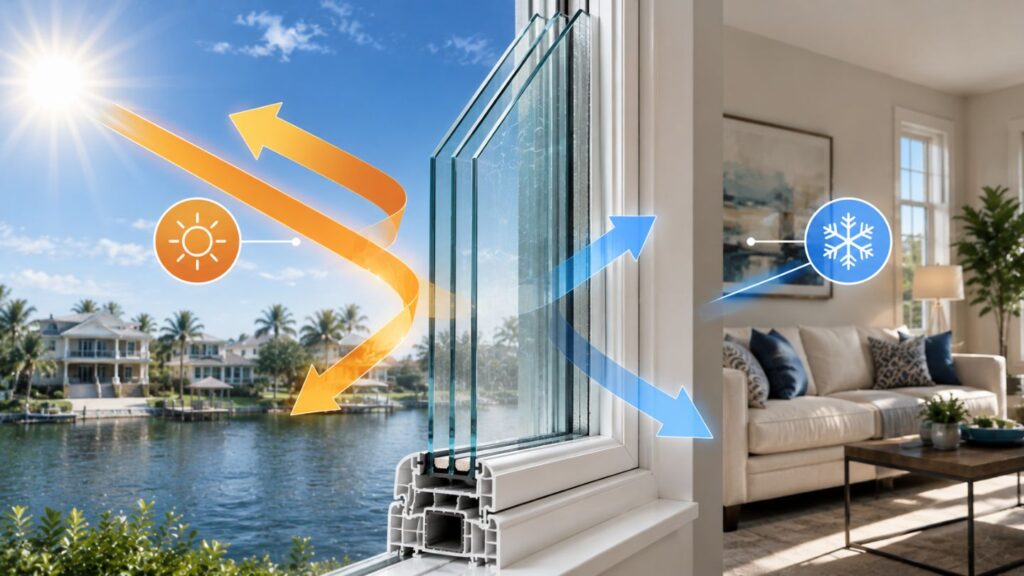
Living along the Gulf Coast means dealing with relentless summer heat, intense UV exposure, and the ever-present threat of hurricane season. For League City homeowners seeking relief from sky-high cooling costs and better protection for their homes, low-e glass has become the go-to solution. This specialized window technology reflects heat while letting natural light flood your living spaces, making it perfectly suited for our challenging coastal Texas climate.
This blog breaks down exactly how low-e glass works, which types perform best in southern climates like ours, and what you need to know when selecting energy-efficient windows for your League City home.
Key Takeaways
- Low-e glass can reduce energy costs by 25-30% by minimizing heat transfer and reducing reliance on air conditioning during hot Texas summers
- Soft coat low-e coatings provide superior solar heat gain control, making them the preferred choice for League City’s intense sun exposure
- The metallic oxide coating reflects harmful UV rays, protecting furniture, flooring, and fabrics from fading and extending their lifespan
- Low-e coatings can be combined with hurricane impact-resistant glass, giving homeowners both energy efficiency and storm protection in one window
- Choosing the right Solar Heat Gain Coefficient (SHGC) is critical for hot climates. Aim for values between 0.20 and 0.30 for south and west-facing windows
What is Low-E Glass and How Does It Work
Low-emissivity glass is standard window glass treated with a microscopic, invisible metallic oxide coating that reflects harmful ultraviolet and infrared light while allowing visible light to pass through unobstructed. This coating is so thin, about 1/10,000th the width of a human hair, that you won’t notice any difference in appearance compared to clear glass.
The science behind low-e glass centers on controlling heat transfer. When sunlight hits your windows, it carries energy in three forms: visible light (what you see), ultraviolet light (which fades your furniture), and infrared light (which you feel as heat). Standard glass allows all three to pass through freely, turning your home into a greenhouse during the summer months.
Low-e coatings work by reflecting infrared light back toward its source. During hot Texas summers, this means solar heat bounces away from your home instead of warming your interior surfaces. The coating’s emissivity, its ability to radiate thermal energy, drops from about 0.84 for standard glass to as low as 0.03-0.05 for premium soft coat products. This huge difference translates directly into lower cooling bills and more comfortable indoor temperatures.
Types of Low-E Coatings for Coastal Texas
There are two main types of low-e coatings: hard coat (pyrolytic) and soft coat (sputtered), each designed for different climate conditions.
Soft coat low-e glass is applied in vacuum chambers using multiple ultrathin metallic layers, primarily silver. This manufacturing process creates coatings with exceptional solar control properties, lower emissivity, significantly reduced solar heat gain coefficient, and stronger UV rejection. Soft coat low-e glass is generally preferred for southern climates as it provides better solar control and energy savings compared to hard coat low-e glass. The coating must be protected inside an insulated glass unit (double pane or triple pane configuration), making it slightly more expensive but far more effective for our climate.
Hard coat low-e glass is more durable and is typically used in colder climates, as it is less effective in blocking solar heat gain during hot weather. Applied during the glass manufacturing process while the glass is still hot, the hard coat creates a chemically bonded layer that can withstand more handling. However, its higher emissivity (around 0.15-0.25) and higher SHGC make it less suitable as the primary coating for League City homes dealing with intense Gulf Coast sun.
In Texas, low-e coatings are crucial for reducing solar heat gain while allowing natural light inside, making them essential for homes in hot climates. These energy-efficient window systems can be combined with other technologies, such as argon gas filling, to enhance energy performance in various climates, creating windows that truly work for our coastal environment.
Benefits of Low-E Glass for League City Homeowners
The advantages of installing low-e glass windows extend far beyond simple energy efficiency, touching everything from your monthly utility bills to the longevity of your home’s interior finishes.
Energy Savings During Hot, Humid Summers
Low-e glass can significantly reduce energy costs by minimizing heat transfer, keeping homes cooler in summer and warmer in winter, which can lead to savings of 25-30% on energy bills. For a League City household spending $2,000 annually on cooling costs, this translates to $500-$600 in significant savings each year. In hot climates like Texas, low-e glass significantly reduces solar heat gain while allowing natural light to enter, enhancing indoor comfort and reducing reliance on air conditioning. Homeowners looking to maximize these benefits can also explore how to unlock energy savings by financing their window and door upgrades, making improvements more affordable.
UV Protection for Your Home’s Interior
The metallic oxide coating on low-e glass reflects harmful UV rays, which helps to protect furniture, flooring, and fabrics from fading and damage, extending their lifespan. Premium low-e coatings block 70-95% of ultraviolet light, responsible for accelerated fading from prolonged sun exposure. Your hardwood floors, upholstery, artwork, and carpeting remain vibrant years longer than they would behind standard clear glass.
Read More: Advantages of Energy-Efficient Windows With UV Protection
Enhanced Comfort Throughout Your Home
Low-e glass helps maintain stable indoor temperatures, reducing the strain on HVAC systems, which can lead to lower maintenance costs and longer service life for heating and cooling units. Those hot spots near south-facing windows disappear, and you no longer need to draw blinds against the afternoon sun just to keep rooms comfortable. The temperature consistency makes every square foot of your living space usable, even during peak summer months.
Complementing Hurricane Protection
League City sits in a coastal hurricane risk zone, making impact-resistant windows a smart investment. Low-e coatings can be applied to laminated, impact-rated glass within insulated glass units while still meeting wind and debris resistance requirements (ASTM E1996/E1886). This means you can achieve both energy efficiency and storm protection from a single window installation.
Low-e glass can help extend the life of HVAC systems by reducing the workload on heating and cooling units, leading to less frequent maintenance and repairs, an often-overlooked benefit that adds to your long-term cost savings.
Common Mistakes League City Homeowners Make
Choosing the Wrong Coating Type
Many homeowners don’t realize that hard-coat low-e performs differently than soft-coat in different climates. Installing hard coat on west-facing windows in League City results in higher heat loss and lower solar control effectiveness, undermining your energy performance goals.
Focusing Only on U-Factor
While U-factor measures insulation value, choosing the right low-e glass involves considering the Solar Heat Gain Coefficient (SHGC), which is particularly important in warmer climates like Texas. In our hot climate, SHGC has a larger impact on cooling costs than U-factor because window placement and orientation determine how much direct sun each opening receives. Aim for SHGC values of 0.30 or lower for windows receiving direct sunlight.
Overlooking Coastal Installation Requirements
Salt air near Galveston Bay accelerates corrosion if frames and seals aren’t properly specified. Choosing the right energy-efficient window frame materials and avoiding poor installation prevent IGU seals from failing, which can lead to fogging and moisture damage that reduces your low-e coating’s effectiveness.
Not Planning for Manufacturing Lead Times
Custom low-e impact windows typically require 4-6 weeks of manufacturing time before installation, plus permitting. Expecting same-week replacement windows leaves homeowners frustrated and potentially without weather protection during critical periods.
Read More: Common Window Problems That Repairs Can’t Solve
Selecting the Right Low-E Glass Configuration for Your League City Home
Making smart choices about your low-e window glass requires understanding how different configurations perform under our specific coastal Texas conditions.
Best Options for South and West-Facing Windows
Windows facing the intense afternoon sun need the most aggressive solar control. Soft coat low-e glass is generally recommended for southern climates, as it provides better comfort and energy savings compared to hard coat options. Target specifications include SHGC between 0.20-0.30, U-factor of 0.30 or lower, and visible light transmission of 70-80% to maintain bright, naturally lit interiors without excessive heat gain.
Double-Pane vs. Triple-Pane Considerations
Double-pane insulated glass units with soft coat low-e and argon gas fill provide excellent energy performance for coastal Texas homes. Triple-pane configurations offer marginally better insulation but with diminishing returns relative to cost in our climate. The investment in triple-pane windows makes more sense in northern climates with extreme cold winters.
Combining Low-E with Impact Resistance
For homes near Galveston Bay, combining low-e coatings with laminated impact glass creates windows that address both energy consumption and storm protection. Look for products with PVB interlayers in the laminated glass, vinyl, or fiberglass frames with thermal breaks, and resistance to salt air corrosion.
Maintaining Natural Light Balance
Different types of low-e coatings can introduce subtle color variations; some appear slightly teal or blue-tinted. Premium coatings designed for high visible light transmission minimize any different color cast while still providing excellent solar control. Discuss sample options with your window provider to ensure the aesthetic matches your contemporary home’s requirements.
Smarter Comfort and Long-Term Value
Low-E glass has become a smart investment for homeowners looking to improve indoor comfort, reduce energy costs, and protect interiors from harmful UV rays. With its ability to regulate indoor temperatures year-round, this advanced window solution offers both efficiency and long-term value, making it a practical choice for modern homes in League City.
Advanced Window Products is a trusted window company in League City, helping homeowners upgrade their properties with durable and energy-efficient window solutions. From hurricane windows to professional window installation, we deliver reliable products designed for lasting performance and protection. Contact us today to learn how our team can help enhance the comfort, style, and efficiency of your home.
Frequently Asked Questions
Do Low-E coatings work with hurricane impact-resistant windows?
Yes, low-e coatings integrate seamlessly with laminated impact glass in insulated glass units. The coating is applied to the interior surfaces of the glass assembly, where it remains protected while still providing full solar control. This combination lets you address both energy costs and storm protection with a single window upgrade.
What’s the difference between Low-E glass and window film?
Low-e glass features a factory-applied metallic oxide coating that becomes a permanent part of the glass structure, lasting the lifetime of the window. Window film is an aftermarket adhesive product applied to existing glass surfaces that may bubble, peel, or degrade over time. Low-e glass provides superior durability and performance, especially in coastal environments with intense sun exposure.
How long do Low-E coatings last in coastal Texas conditions?
When properly manufactured and sealed within an insulated glass unit, soft coat low-e coatings maintain their energy performance for 20-30+ years. The key is quality installation with appropriate frame materials resistant to salt air and humidity. Look for comprehensive warranties covering IGU seals and coating performance.
Can Low-E glass help reduce outside noise in my League City home?
Windows with laminated impact glass and low-e coatings do provide noticeable sound reduction, typically making homes around 30% quieter than with standard single-pane windows. While not truly soundproof, the improvement is significant for homes near busy roads or in active neighborhoods.
What’s the manufacturing and installation timeline for custom Low-E windows?
Custom low-e impact windows typically require 4-6 weeks for manufacturing before installation can begin. Add time for initial consultation, measurements, and local permitting. Planning ahead is essential, especially before hurricane season or during peak summer months when demand increases.